
Preventing Frozen Pipes: What Every Lexington Homeowner Should Know Before the Deep Freeze
Lexington Homeowner's Guide: Preventing Frozen Pipes
Actionable Steps Before the Deep Freeze Hits
When winter settles into Lexington, freezing temperatures can put your home’s plumbing to the test. Frozen pipes are one of the most common and costly problems homeowners face during New England winters, but with a little preparation, they’re also one of the easiest to prevent. Understanding how pipes freeze and what you can do to protect them is the key to avoiding burst lines, water damage, and expensive repairs.
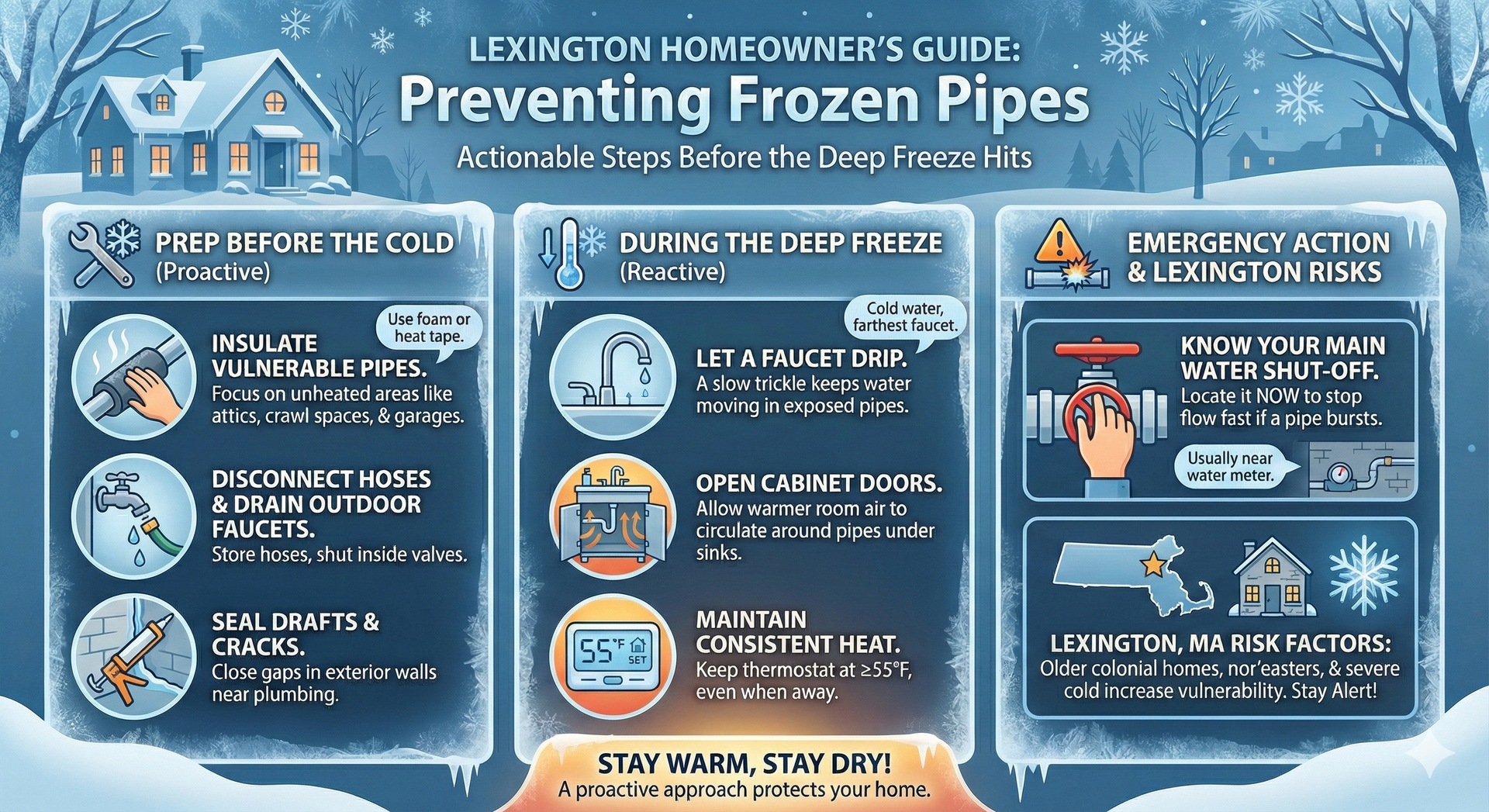
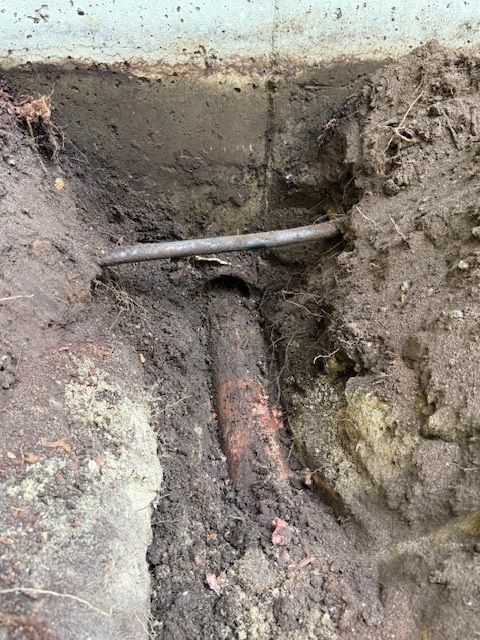
Pipes freeze when the water inside them drops below 32 degrees and turns to ice. As the ice expands, it creates pressure that can cause the pipe to crack or burst. When that ice finally thaws, water rushes out, often flooding walls, basements, and floors. The most vulnerable pipes are those located along exterior walls, in unheated areas like basements, garages,
and crawl spaces, or near windows and doors where cold air can sneak in.
One of the easiest ways to prevent freezing is to add insulation around exposed pipes. Foam pipe sleeves or wrap-around insulation are inexpensive and effective options that help maintain warmth and reduce the risk of ice forming inside the line. Pay special attention to pipes running through attics, basements, or under sinks against exterior walls. Even a small amount of insulation can make a big difference.
Maintaining steady indoor temperatures also helps protect your plumbing. During especially cold nights, keep your thermostat set to at least 55 degrees, even if you’re not home. Opening cabinet doors under sinks allows warm air to circulate around pipes, especially in kitchens and bathrooms along outside walls.
Another simple but effective tip is to let a small trickle of water run from a faucet during extremely cold weather. Moving water is less likely to freeze, and the small amount of flow can help relieve pressure inside the line if ice does begin to form.
It’s also a good idea to disconnect and drain outdoor hoses before the first freeze. Leaving hoses attached can cause water to back up into the faucet and freeze inside the line. For extra protection, consider installing frost-proof spigots or insulating outdoor faucets with covers.
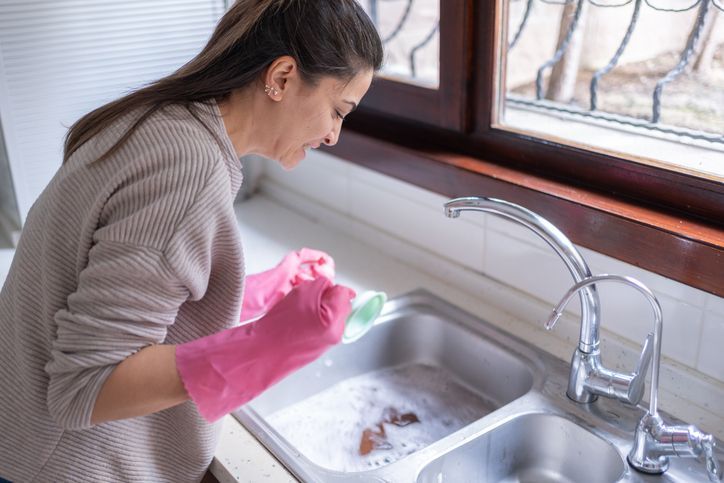
Knowing the warning signs of a frozen pipe can help you act fast. If you turn on a faucet and only a trickle of water comes out—or none at all—it may mean a section of pipe is frozen. In that case, turn off your main water supply and call a licensed plumber immediately.
Frozen pipes are a winter problem no homeowner wants to face, but they’re largely preventable with the right preparation. By taking small steps now insulating exposed lines, maintaining steady temperatures, and staying alert you can keep your home safe, dry, and running smoothly all winter long.
Steve's Corner - Kirkland and Shaw Blog